From a simple idea to a programme supporting 212 players from 152 clubs, Hockey Mentors Founder Jack Childs reflects on the coaching, scholarships and hard work behind its growth.
By Jack Childs
Sometimes things happen so quickly that you don’t have time to take stock. Building the High Performance Programme (HPP) has certainly been one of those things.
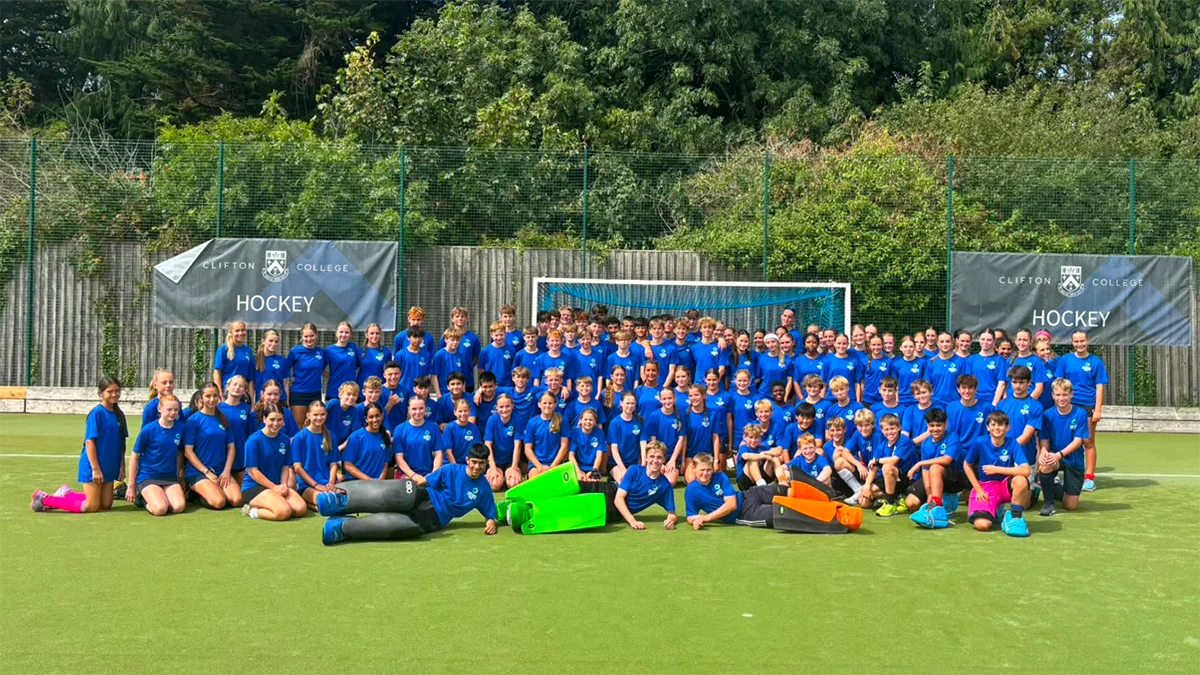
Having 130 junior performance players from state schools and/or ethnic minority backgrounds, from all around the country, on a two-day camp at one of the top private schools in the country feels normal these days. It isn’t.
These players will come from 94 clubs to take part in a 2-day camp at Clifton College in Bristol, led by their Director of Hockey, Olly Keenan, supported by a team of National League level coaches and players who have played junior or senior international hockey.
The player base literally covers the whole of England. Players come from Yorkshire, Norwich, Cornwall and everything in between, as well as a few from Wales.
What unites them all is two things. They are all players from state schools and/or ethnic minorities who have been selected onto the programme, and they all want to improve their hockey.
Behind the scenes of a High Performance Programme camp
I’m writing this on the Friday morning before a long four-hour drive to Clifton College in Bristol to oversee the second of our five 2026-27 HPP camps. It was an early start.
For the previous two days, I had stayed at my parents’ house in the Cambridgeshire countryside: part-time family home, part-time unofficial ‘Hockey Mentors Warehouse’. There was a lot of kit to sort, not only for the HPP camp but also for the upcoming World Youth Festival.
I had a crazy 10 days coming up, with a two-day camp in Bristol, followed by a training day in Burton upon Trent and a six-day tour to the Netherlands.
From mentoring to a dedicated training programme
In the first year of Hockey Mentors, we just did an online mentoring programme and two two-day events where people turned up and played. No training, no coaching – just connection.
It was clear from this first year that the players wanted much more. And it didn’t take Einstein to work out that a dedicated training programme with focused coaching might help hockey players get better.
This transitioned us from what was merely a passion project in the first year, where I had not earnt a single penny, into a coaching company with purpose.
And, to be honest, I had no clue what I was doing. As a junior player, I had never been on a coaching company’s camp, and as an adult coach, I had never coached on one either. I just had one single idea and two advantages.
The single idea was that I wanted to help junior performance players from state schools and/or ethnic minority backgrounds fulfil their potential. Some might call that a strategic unique selling point; the truth was it was just luck.
I did zero formal market research, I had no funding and I definitely didn’t have a business plan. Sorry to burst any entrepreneurial bubbles, but I just made it up as I went along, with lots of passion, lots of support, lots of mistakes and sometimes just plain good old-fashioned luck.
The courage and connections to get started
I did have two advantages though.
The first was that I had the courage to put myself into very uncomfortable situations and TRUST. I learnt this from coaching a university men’s first team when I was only 20 and, frankly, miles out of my depth. Experiences like that build deep resilience in you.
The second was that I did have some good connections in hockey already. It does rather help if you want to build something. Admittedly, I wasn’t born into those connections at my local comprehensive state school, but they were there.
So, we experimented.
The first camps and Jamie Cachia’s involvement
We designed a summer programme of four two-day camps, each with around 30-40 kids.
The real JC came on board. Not me, but the big man Jamie Cachia himself, a former senior Scottish international and current Head of Women’s Performance Hockey at Loughborough University.
He loved the sound of what we were doing and wanted to get involved. Luckily for us, we had stumbled upon one of the best coaches in the country, and that made a huge difference to the buzz of the camps.
After that initial success, the next month was a manic one of building a proper high-performance programme for the following year. The aim was to start taking the demand from the player network we were building more seriously and see if we could put a proper programme in place.
I decided I was still not going to pay myself in this second year, as I wanted to create a massive scholarship scheme for the players and give it the best chance of success.
Building the programme around a full-time job
The manic month was up there with the most intense of my life. I was working full-time for a social impact company in Sevenoaks, then using any spare time to put a high-performance programme of five two-day camps together for the following year.
It was 9am-5pm at work and 5pm-9pm on Hockey Mentors, then full weekends dedicated to Hockey Mentors. It was exhausting. Phone call after phone call to share with parents what we were doing, booking pitches, getting coaches and so on.
Although it was exhausting, it was a different type of exhaustion. Not the lethargic, bored, heavy feeling, but more an outpouring of everything one can give to a bigger purpose. It was exhilarating and fun.
Eventually, we got there. Vamos!
The first High Performance Programme and £25,000 in scholarships
The first official High Performance Programme was born. Around 90 players from all over England paid different amounts depending on what they could afford. That first year, we gave away a crazy £25,000 worth of scholarships.
Although that sounds very noble, I learnt a hella lot of lessons from that first experience of building a bigger programme. I would then implement those lessons to make things more sustainable going forward, as one needs to balance everything financially so it is fair to all.
Another blog post, I think 😊
Growing to 212 players from 152 clubs
After that first High Performance Programme in 2022-23, it has grown year on year to what it is now.
This season, we have 212 players on the High Performance Programme from 152 clubs, who attend between three and five of the two-day camps across the August 2026-April 2027 cycle.
These players all committed in May 2026 after open trials in April 2026, with large numbers of players unfortunately missing out as we seek to balance giving opportunities with ensuring we can still deliver quality.
The camps will include a mixture of indoor and outdoor hockey, as well as off-pitch educational sessions.
The High Performance Programme now sits within a broader, complementary talent pathway that works alongside the England Hockey pathway to help junior players from state schools and/or ethnic minority backgrounds have the best possible chance of entering elite pathways, such as junior international hockey.
And it all happened within five years, from a simple idea to give state school and ethnic minority players a better chance. Through hard work, clear purpose and a little luck.